From isolated services to a dependable circle of care
Maternal and Infant Health
Use HOPE to strengthen connection, dignity, practical support, parent voice, and the conditions surrounding pregnancy, birth, infancy, and early parenthood.
Understand
Begin with the experience people are having.
A strengths-based maternal and infant health system does more than give families information. It makes supportive relationships easier to reach, environments safer and more stable, participation possible, and emotional support ordinary.
Growing HOPE treats the parent, infant, family, and surrounding community as connected. Material needs, culture, caregiving partners, transportation, work, housing, and trust all shape whether a positive experience is actually available.
Translate the framework
The four building blocks in this setting
Relationships
Create continuity with trusted people before, during, and after birth; include partners, kin, peers, doulas, home visitors, and community health workers as families choose.
Environments
Reduce practical barriers to safe housing, food, transportation, rest, health care, and welcoming public spaces without turning support into a test of parental worth.
Engagement
Invite parents into real choices about care, program design, schedules, outreach, and the community conditions they want strengthened.
Emotional growth
Make nonjudgmental check-ins, co-regulation, repair, and mental-health pathways part of ordinary care for every family.
Five-part learning presentation
Maternal and Infant Health in practice
Use the arrows, keyboard, or swipe to move through the five framing questions.
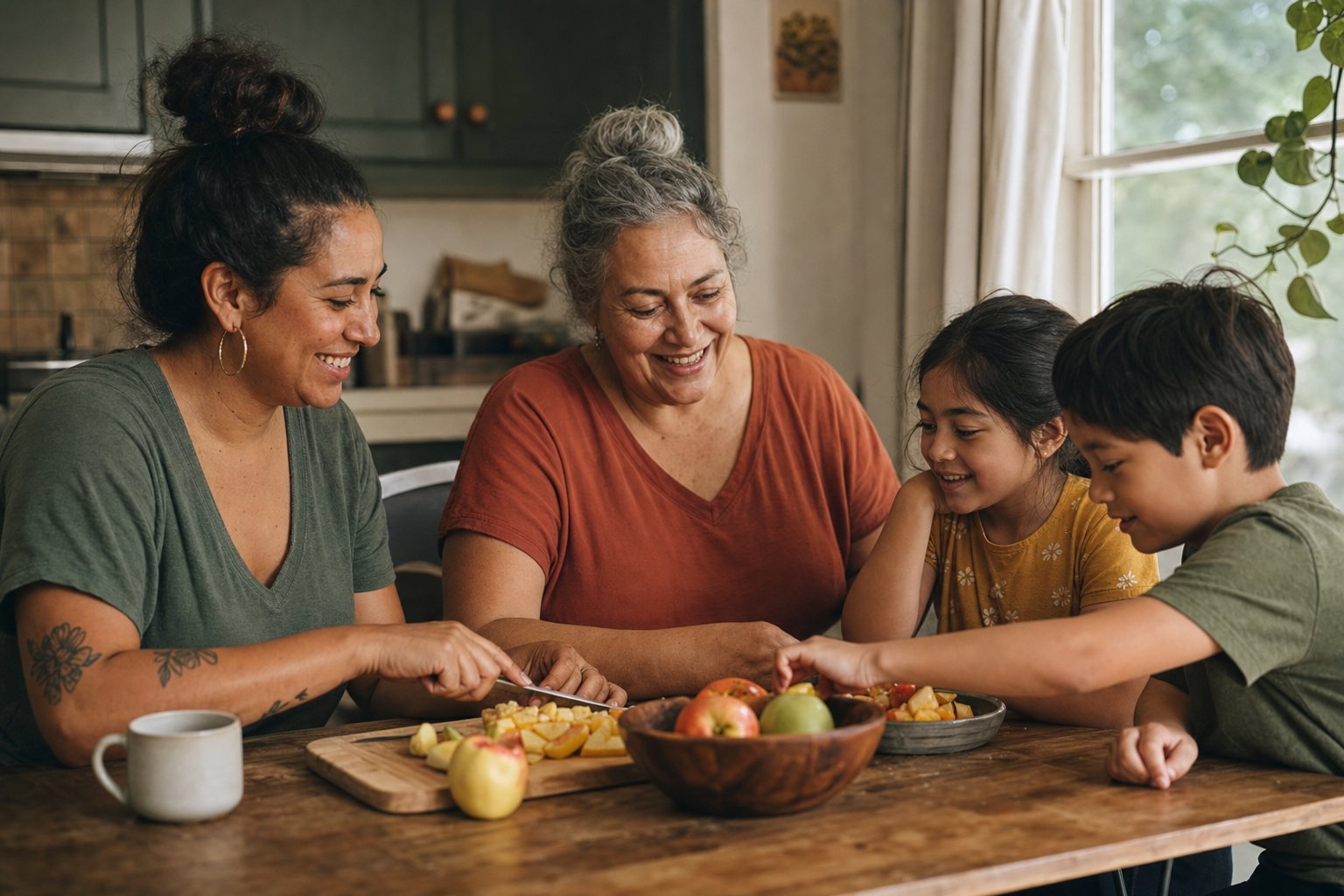
01 · Begin with dignity
A parent is a person, not a risk profile.
Start with the family's goals, relationships, culture, knowledge, and immediate realities. Screening without a trustworthy response pathway can deepen disconnection.
What would help this parent feel respected and less alone today?
Put it into practice
Five moves to begin
- Add a strengths-and-support question before a needs checklist.
- Create one named warm-handoff pathway and verify that the connection occurred.
- Include caregiving partners and chosen supporters when the parent wants them involved.
- Compensate parents for sustained advisory, design, and leadership work.
- Review forms, waiting rooms, messages, and follow-up practices for dignity and accessibility.
Learn and adapt
Questions worth tracking
- Do families report feeling known, respected, and able to ask for help?
- Which families are least likely to complete a referral, and what system condition contributes?
- Are parent recommendations changing decisions, budgets, or practice?
- What positive experiences are families already creating that services can protect?
Go deeper
Tools and next pathways
Source trail
Read and attribute the foundation.
Implementation partnership
Bring this pathway into a real community or organization.
Kimberly Ladd supports coalitions and implementation partners in adapting HOPE with community voice, practical systems learning, and a clear source boundary.